Home › Commercial › SBA 504 Loans
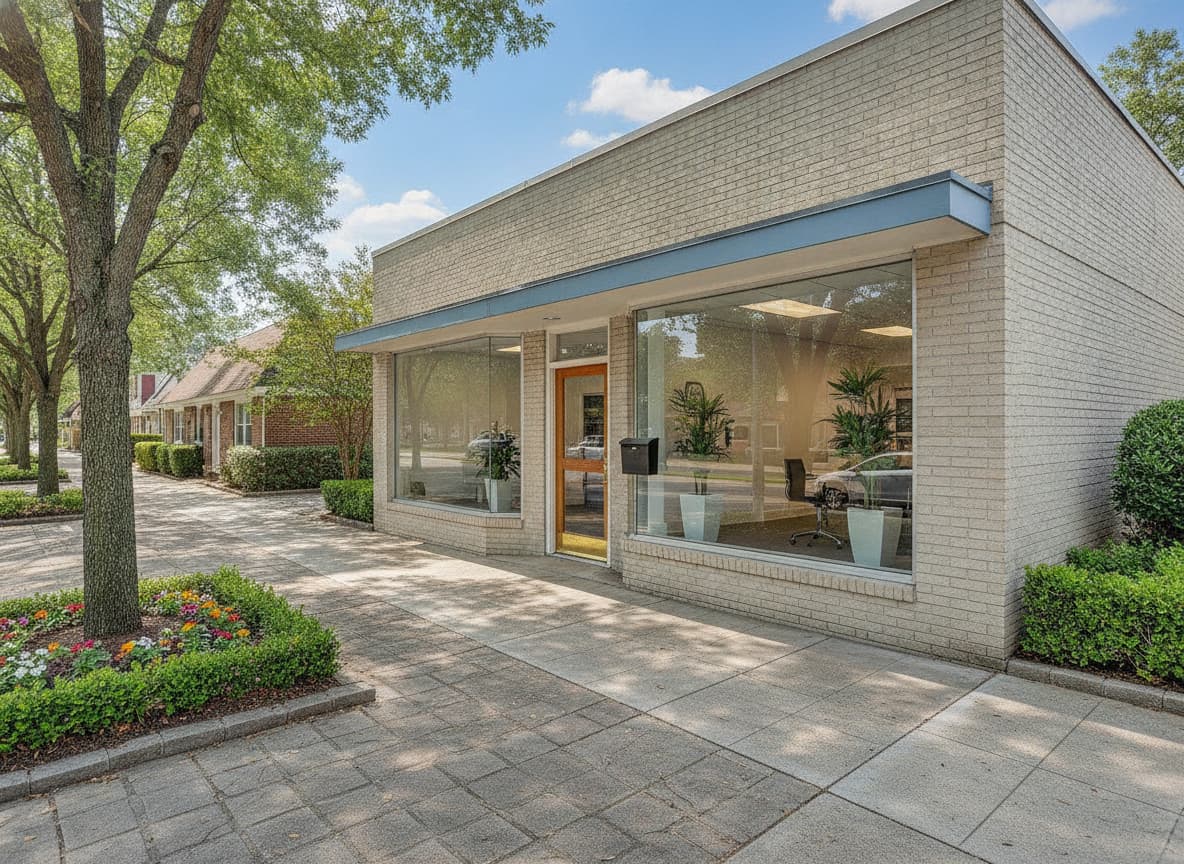 SBA 504 Commercial Real Estate Financing
Own your building with as little as 10% down
The SBA 504 loan lets owner-occupant businesses buy, build, or renovate commercial property and heavy equipment with a low down payment and a long-term fixed rate on the SBA portion. North Bay Capital shops the bank and CDC side together so the numbers actually work for you.
The SBA 504 loan is built for small businesses that want to own the building they operate in. It pairs a bank first mortgage, a fixed-rate SBA-backed second through a Certified Development Company, and a low borrower down payment — usually 10% — into one financing structure for purchase, construction, renovation, or long-life equipment.
Programs we broker
The options under sba 504 loans — and the right fit for each.
SBA 504 Real Estate Loan
Buy or build owner-occupied commercial property with just 10% down.
The 504 program is built for one thing: helping small businesses own their real estate. The classic structure is 50/40/10 — a bank or credit union covers 50% as a first mortgage, a Certified Development Company (CDC) covers 40% as a second mortgage backed by the SBA, and you put down 10%. The CDC piece carries a long-term fixed rate, which is the part most borrowers care about.
I broker 504 purchases and ground-up construction for office, retail, warehouse, industrial, medical, and mixed-use buildings. To qualify, your business needs to occupy at least 51% of an existing building (or 60% of new construction). I line up the bank first, then bring in a CDC partner that knows your industry.
- Buying the building your business already leases
- Ground-up construction of a headquarters or shop
- Expanding into a larger owner-occupied space
- Acquiring a medical or professional office condo
SBA 504 Equipment Loan
Long-life machinery financed with the same 504 fixed-rate structure.
Most people associate 504 with real estate, but the program also finances heavy equipment with a useful life of ten years or more. Think CNC machines, printing presses, commercial HVAC systems, manufacturing lines, refrigeration units, or large vehicles that stay put. The 50/40/10 split still applies — bank first, CDC second, 10% from you — and the CDC portion is fixed for the equipment's term.
If you're financing real estate and equipment together as part of one expansion, both can sit inside the same 504 project, which keeps your closing costs and paperwork consolidated. I work with your equipment vendor and the CDC to make sure the useful-life documentation lines up with SBA's rules.
- Manufacturer adding a production line
- Print shop financing new presses
- Commercial laundry installing industrial equipment
- Food processor buying refrigeration and packaging gear
SBA 504 Green / Energy-Efficient Loan
Higher loan limits when your project hits the SBA's energy goals.
The SBA carved out a green track on the 504 program for projects that either reduce energy consumption by at least 10%, generate renewable energy on-site, or use sustainable design. The big benefit: the CDC debenture cap goes up, meaning you can finance a larger project under one 504 loan instead of being stuck at the standard limit.
This is the path I use for solar arrays on owner-occupied buildings, energy-efficient new construction, and major retrofits with LED lighting, high-efficiency HVAC, or building envelope upgrades. You'll need an energy audit or design certification to qualify for the green tier, and I help line up that report alongside the loan.
- Adding rooftop solar to an owner-occupied building
- Energy-efficient ground-up construction
- Major HVAC and lighting retrofit
- Multi-property expansion with renewable components
SBA 504 Refinance with Expansion
Refinance existing commercial debt and roll the expansion into one loan.
If you already own your building and you're planning to expand — either by adding square footage or buying an adjacent property — the 504 program lets you refinance the existing mortgage and fund the expansion in the same transaction. The catch: at least some portion of the project has to be a true expansion, not just a rate-and-term refi.
There's also a standalone 504 refinance option (without expansion) that has its own rules around eligible debt, seasoning, and cash-out for business operating expenses. Both versions use the same 50/40/10 framework, and the CDC piece comes with the long-term fixed rate that makes 504 worth the paperwork.
- Owner adding square footage and refinancing the original loan
- Buying the lot next door and rolling in existing debt
- Refinancing a balloon coming due while expanding
- Combining expansion construction with existing mortgage payoff
SBA 504 Special-Use Property Loan
504 financing for hotels, gas stations, and other single-purpose buildings.
Special-use or single-purpose properties — hotels and motels, gas stations and c-stores, car washes, self-storage, bowling alleys, funeral homes, assisted living facilities — are still eligible for 504, but the SBA requires a larger borrower contribution because the property is harder to repurpose if the business fails. Expect to put down 15%, sometimes 20%, instead of the standard 10%.
If the business is also a startup, the down payment stacks higher. I broker a lot of hospitality and fuel/c-store 504 deals — they take longer and require detailed feasibility and industry-experience documentation, but the long-term fixed CDC rate often makes them worth the extra effort versus a conventional commercial loan.
- Acquiring an existing hotel or motel
- Buying a gas station with c-store component
- Financing an assisted living facility purchase
- Self-storage facility acquisition or construction
Calculators for this loan
What people ask before they apply
What is an SBA 504 loan and how does it work?
An SBA 504 loan is a commercial real estate and equipment loan for small businesses that occupy the property they finance. It combines three parts: a bank first mortgage for about 50% of the project, a fixed-rate second from a Certified Development Company (CDC) backed by the SBA for about 40%, and a borrower down payment of about 10%. That structure is why people call it the 50/40/10 program. The CDC second carries a long, fixed rate, which keeps your overall payment stable for the life of the loan.
How much do I have to put down on an SBA 504 loan?
Most established businesses buying a standard-use building put down about 10%. If your business is a startup with under two years of history, expect roughly 15%. If the property is special-purpose — a hotel, gas station, or similar single-use building — that also adds about 5%. A startup buying a special-use property generally needs around 20% down.
What can an SBA 504 loan be used for?
504 funds can purchase existing buildings or land, finance new construction, renovate or improve facilities, build out parking and utilities, and buy machinery or equipment with at least 10 years of useful life. In certain cases the program can also refinance qualified existing commercial debt. It cannot be used for working capital, inventory, or to buy rental real estate you don't occupy.
Do I have to occupy the building to qualify?
Yes. The 504 program is owner-occupied financing. For an existing building, your business must occupy at least 51% of the space. For new construction, the requirement is generally 60% occupancy at the start, rising toward 80% over time. You can lease out the remaining square footage, which is one reason owner-users like buying a slightly larger building than they need today.
What is the maximum SBA 504 loan amount?
The CDC (SBA-backed) portion can go up to $5 million for most projects, and up to $5.5 million for small manufacturers and certain energy-efficient projects, per project. Because that's only the 40% piece, total project size can be considerably larger once the bank first mortgage and your down payment are added in. As of July 4, 2026, eligible borrowers can also combine 7(a) and 504 financing for up to $10 million in total SBA-backed credit.
What are the SBA 504 fixed-rate terms?
The CDC second mortgage is fixed for its full term. Real estate projects are typically structured over 20 or 25 years, while equipment-focused 504 loans usually run 10 years, matched to the asset's useful life. The bank first mortgage has its own terms, which we negotiate as part of shopping your deal. Verify the current effective rate for your scenario, since the CDC rate is set when the debenture is funded.
Are there job-creation requirements for a 504 loan?
The program is designed to promote business growth and job creation, and projects are generally expected to create or retain about one job for every $90,000 of CDC funding (roughly $140,000 for small manufacturers). If a project doesn't hit that benchmark, it can still qualify by meeting an alternative public-policy or community-development goal. We'll walk through how your project fits before you apply.
Is North Bay Capital an SBA lender or a broker?
North Bay Capital is a brokerage. We work with banks and Certified Development Companies across the country to assemble the 504 structure, rather than pushing a single in-house product. Commercial 504 financing is offered broadly, not just in California. That means we can shop the bank first mortgage and the CDC side together to find the combination that fits your project and your cash position.
Jesse Gonzalez, President & Founder
NMLS #278103 · CA DRE #01855372 · Last reviewed June 24, 2026
Thinking about owning your building?
Bring us the property and your numbers, and we'll model the full 504 structure — down payment, the bank first, and the fixed-rate CDC second — so you know exactly where you stand before making an offer. Call Jesse Gonzalez at North Bay Capital at 707-595-5393, or email jesse@northbaycap.com. A real person answers, and there's no pressure to commit.