Home › Loan options › P&L Loans
 Non-QM · Self-employed · Alternative documentation
Qualify with a profit and loss statement, not your tax returns.
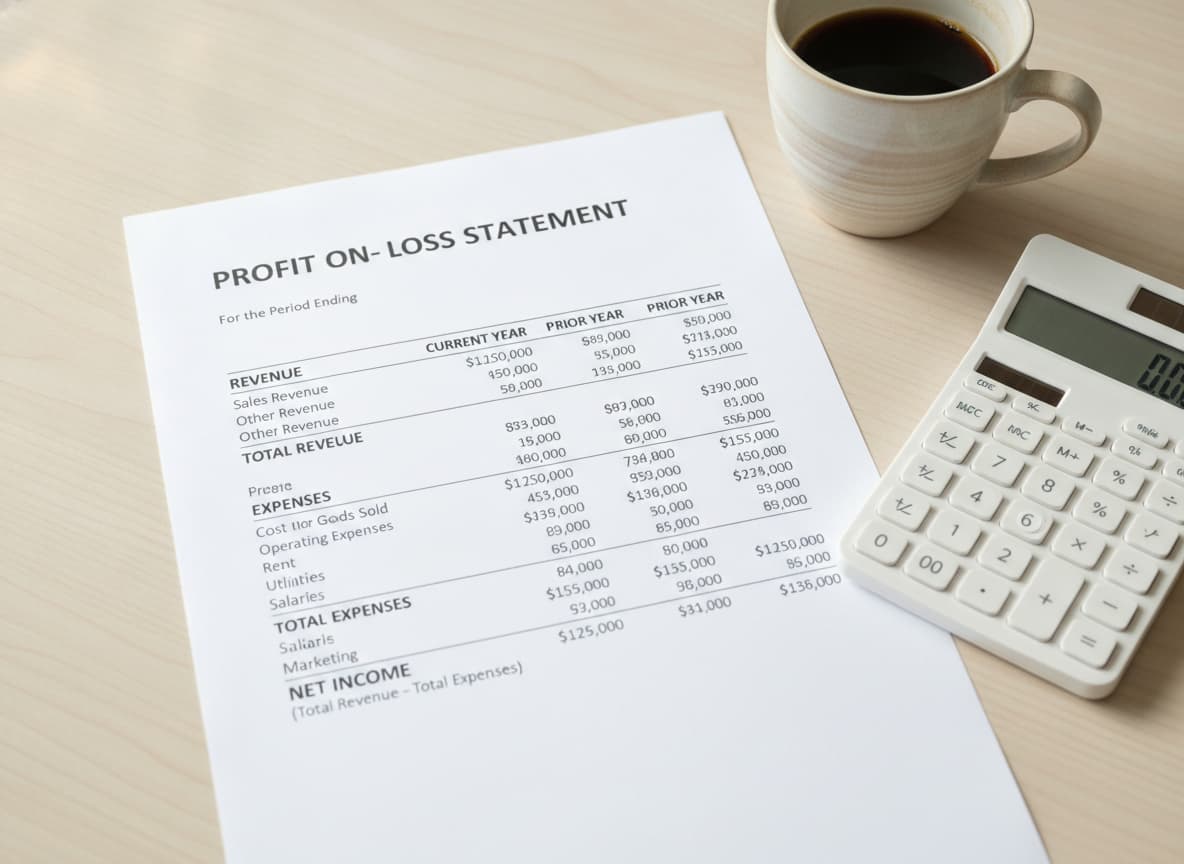
If you own a business and your CPA already keeps clean books, a P&L statement loan can get you approved on a profit and loss statement your accountant prepares — no W-2s, no two years of returns, no parsing every deposit. North Bay Capital shops dozens of Non-QM lenders to match your numbers to the right program.
P&L statement loans are a Non-QM option that lets self-employed borrowers qualify using a 12-to-24-month profit and loss statement prepared by a licensed CPA, EA, or tax preparer — instead of tax returns or a full bank-statement analysis. North Bay Capital, a California brokerage led by Jesse Gonzalez, compares lenders to find the down payment, credit, and occupancy terms that fit your business.
Programs we broker
The options under p&l loans — and the right fit for each.
12-Month CPA-Prepared P&L Only
Qualify on a single year of profit and loss, prepared and signed by your accountant.
Your CPA, enrolled agent, or licensed tax preparer prepares a profit and loss statement covering the most recent twelve months, signs it, and that's the income document. The lender uses the net (or, on some programs, the gross with an expense ratio) figure on that statement to calculate qualifying income — no tax returns, no W-2s, no line-by-line deposit review. It's the shortest paper trail any P&L program offers.
I reach for the 12-month version when a borrower's most recent year is materially stronger than the prior year, or when the business is new enough that 24 months isn't yet available but the last twelve are solid. Expect lenders to want at least two years of self-employment in the same business, even when the P&L only covers one of them.
- Most recent year is your strongest
- Business hasn't been around long enough for 24 months
- Borrowers who want the lightest possible paperwork
24-Month CPA-Prepared P&L Only
Two years of profit and loss, averaged — usually the better-priced P&L option.
Same idea as the 12-month, but the statement covers the most recent 24 months and the lender averages the income across both years. Because underwriting gets to see a longer track record, this version typically comes with better pricing, a lower minimum credit score, and sometimes a smaller down payment than the 12-month — and it's the program most lenders default to.
It tends to fit established owners whose books are consistent year over year. If your prior year was stronger than your current one, the average will land in between, which can actually help the file. As with all P&L programs, the statement has to be prepared and signed by a credentialed third party — a CPA, EA, or registered tax preparer.
- Established business with steady year-over-year results
- Borrowers wanting the best P&L pricing available
- Files that benefit from averaging a stronger prior year
P&L Plus 2 Months Bank Statements (Hybrid Validation)
A CPA-prepared P&L, lightly validated by two months of business deposits.
This is the hybrid most lenders price best. Your accountant prepares the 12- or 24-month P&L, and you also provide the two most recent months of business bank statements so underwriting can confirm the deposits roughly support the income on the statement. It's a sanity check, not the full deposit analysis a bank statement loan requires — but that quick validation often unlocks better rates, lower down payments, or higher loan amounts than P&L-only.
I lean on this version when revenue is consistent month to month and the business account clearly reflects it. The extra two statements are easy to pull, the underwriting story gets stronger, and the pricing usually rewards the effort. If you have one heavier or lighter month in that window, we'll talk through it before submission so there are no surprises.
- Steady, predictable monthly deposits
- Borrowers chasing the best available P&L pricing
- Service businesses with regular receivables
- Files that need a little extra strength to clear underwriting
P&L Loan for Second Home or Investment Property
Use a profit and loss statement to finance a rental, vacation home, or second property.
P&L documentation isn't limited to your primary residence. Many Non-QM lenders allow a CPA-prepared P&L — 12 or 24 month, with or without the two-month bank-statement validation — on second homes and investment properties. It's a useful path when a rental's own income doesn't quite pencil out for a DSCR loan but your business cash flow clearly does, or when you're buying a second home and don't want to surface tax returns.
Expect a larger down payment and a slightly higher rate than the owner-occupied version, plus a higher minimum credit score on most programs. When the property is a rental, I'll run a P&L scenario and a DSCR scenario side by side so you can see which structure gets you the better terms for that specific deal.
- Rental purchase where DSCR alone won't qualify
- Self-employed second-home buyers
- Cash-out refinance on a held investment property
- Portfolio builders who don't want to use tax returns
Calculators for this loan
What people ask before they apply
What is a P&L statement loan?
It's a Non-QM mortgage that lets self-employed borrowers qualify using a profit and loss statement prepared by a licensed CPA, enrolled agent, or registered tax preparer — instead of tax returns or W-2s. The lender uses the income figure on that statement to determine how much you can borrow. It's designed for business owners whose tax returns understate their real cash flow because of legitimate write-offs.
How is a P&L loan different from a bank statement loan?
Both are alternative-documentation, Non-QM options for the self-employed, but the math is different. A bank statement loan derives income by averaging deposits across 12 or 24 months of statements, which can mean a lot of paperwork. A P&L loan leans on a single income figure your accountant calculates, sometimes paired with just a few bank statements for validation — which many borrowers find simpler and faster.
Who can prepare the profit and loss statement?
Lenders generally require the P&L to be prepared and signed by a licensed third party — a CPA, an enrolled agent (EA), or a registered or licensed tax preparer. A self-prepared statement or one from your bookkeeper usually isn't enough on its own, because the lender is relying on a credentialed professional standing behind the numbers.
Do I need to provide tax returns or bank statements?
On a true P&L program, tax returns are not required. Some lenders ask for a few months of business bank statements alongside the P&L so they can confirm the deposits roughly match the stated income — but that's a light validation, not the full deposit analysis a bank statement loan requires. We'll tell you up front which documents your specific program needs.
How long do I need to have been self-employed?
Most P&L programs want to see at least two years of self-employment in the same business, which is also how long the profit and loss period typically runs. A few lenders will consider one year of self-employment with compensating factors such as a strong credit score, larger down payment, or significant reserves. We can check who's flexible on this if your timeline is shorter.
What credit score and down payment do P&L loans require?
Guidelines vary by lender since these are Non-QM products, but credit scores from around 620 and down payments starting near 10 to 20 percent are common for owner-occupied homes, with stronger files earning better terms. Investment and second-home purchases usually call for a larger down payment and a higher score. Because terms differ so much between lenders, shopping the file matters — that's exactly what we do.
Are P&L loan rates higher than a conventional mortgage?
Generally yes. Non-QM loans price a bit above conventional or government loans to account for the alternative documentation, and the exact rate depends on your credit, down payment, occupancy, and the lender. For many business owners the trade-off is worth it, because qualifying on tax returns simply wouldn't reflect their true income. We'll show you the real numbers so you can weigh it honestly.
Can I use a P&L loan to refinance or pull cash out?
Yes. P&L documentation works for rate-and-term refinances and, on many programs, cash-out refinances as well — handy if you want to tap equity for your business or another property without producing tax returns. Cash-out terms and maximum loan-to-value vary by lender and occupancy, so we'll match your goal to the program that allows it.
Jesse Gonzalez, President & Founder
NMLS #278103 · CA DRE #01855372 · Last reviewed June 24, 2026
Let's see what your books can qualify you for.
Send over a recent profit and loss statement and tell us a little about your business and the property you have in mind. Jesse will compare Non-QM lenders and come back with real numbers — qualifying income, down payment, and rate ranges — and an honest read on whether a P&L loan or another path fits best. Call North Bay Capital at 707-595-5393 or email jesse@northbaycap.com. A real person picks up the phone.