Home › Loan options › Rehab & Renovation Loans
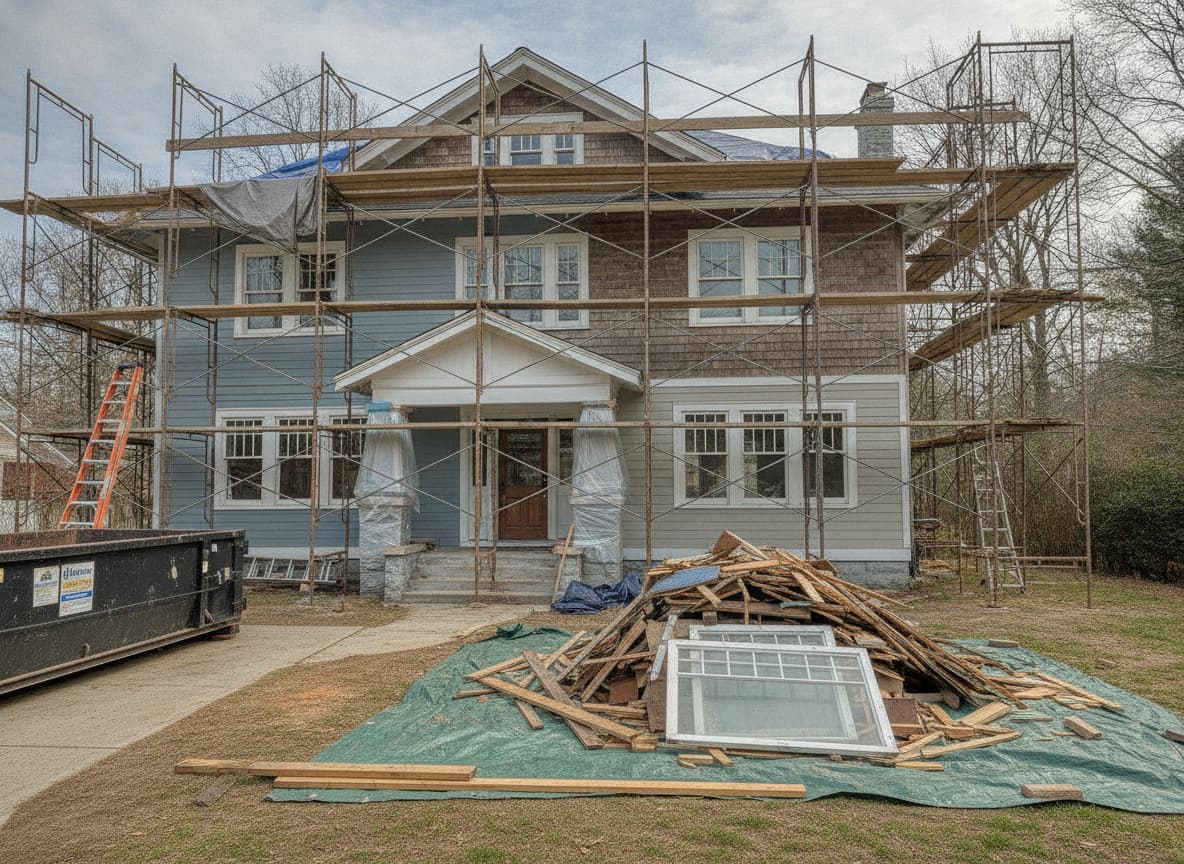 Renovation & Rehab Financing
Buy or refinance and remodel with one loan
A renovation loan wraps the purchase (or your current mortgage) and the cost of repairs into a single loan, qualified on what the home will be worth after the work is done. We shop FHA 203(k) and Fannie Mae HomeStyle to fit your project and your numbers.
Renovation loans let you buy a fixer-upper or refinance your home and fold the remodeling cost into one mortgage, based on the home's after-renovation value rather than its current condition. North Bay Capital shops FHA 203(k) Limited and Standard and Fannie Mae HomeStyle to match the right program to your project.
Programs we broker
The options under rehab & renovation loans — and the right fit for each.
FHA 203(k) Standard Rehab Loan
One FHA loan that finances the purchase and a major renovation, structural work included
The FHA 203(k) Standard is the program you reach for when a house needs real work, not just paint and counters. It rolls the purchase price and the renovation budget into a single 30-year fixed FHA mortgage, and unlike the Limited version, it allows structural changes — foundation repair, room additions, moving load-bearing walls, and gut rehabs are all on the table. There is no hard cap on the renovation amount as long as the total loan stays within the county FHA limit.
Because the scope is bigger, the program requires a HUD consultant who writes the work write-up and inspects each draw, plus a licensed general contractor. Down payment is the same 3.5% FHA minimum based on the after-improved value, and the home has to be your primary residence. It is slower and more paperwork-heavy than a Limited 203(k), but for a true fixer it is often the only way to buy and rebuild with one closing.
- Buying a distressed or outdated home that needs major repairs
- Adding square footage or an ADU as part of the purchase
- Gut-rehabbing an older Sonoma County home with one loan
- Rebuilding after deferred maintenance has compounded
FHA 203(k) Limited (Streamlined-K) Rehab Loan
FHA renovation loan for cosmetic and non-structural fixes up to roughly $75,000
The Limited 203(k), still sometimes called the Streamlined-K, is built for the lighter rehab — kitchens, baths, flooring, paint, roof, HVAC, windows, appliances, and similar non-structural work. The renovation budget is capped at about $75,000 (current and approximate; verify for your scenario), which makes it a clean fit for most cosmetic remodels without the consultant overhead of the Standard version.
You still get the FHA basics: 3.5% down based on the after-improved value, flexible credit, and a single 30-year fixed loan that wraps the price and the work. No HUD consultant is required, so the process is faster, and a licensed contractor handles the scope with a couple of draw disbursements. It is owner-occupied primary residence only, and the work has to be finished within a defined timeline after closing.
- Updating a dated kitchen and bathrooms at purchase
- Replacing roof, HVAC, or windows on a move-in home
- Cosmetic refresh of a foreclosure or estate sale property
- FHA buyers who want one loan instead of a separate reno line
Fannie Mae HomeStyle Renovation Loan
Conventional renovation loan for primary, second home, or investment property — 1 to 4 units
HomeStyle is Fannie Mae's answer to the 203(k), and it is the renovation loan I lean on most for buyers who can qualify conventionally or who want to skip FHA mortgage insurance. It funds the purchase (or refinance) plus the renovation in one conventional loan, and the scope is wide open — structural work, additions, ADUs, pools, landscaping, even luxury items are eligible as long as they are permanently affixed and add value.
Down payment can be as low as 3% for an eligible first-time buyer on a single-family primary, with higher minimums for second homes, investment properties, and 2-4 unit buildings. The renovation budget can run up to 75% of the lesser of the as-completed value or purchase price plus reno cost, which gives serious room for ambitious projects. Loan amounts follow standard conforming or high-balance limits by county.
- Conventional buyers who want to avoid FHA mortgage insurance
- Investors renovating a 2-4 unit rental at acquisition
- Second-home buyers updating a vacation property
- Adding an ADU or expanding a Sonoma County home
Freddie Mac CHOICERenovation Loan
Freddie Mac's full-scope renovation loan, with resilience improvements counting toward equity
CHOICERenovation is Freddie Mac's direct counterpart to Fannie's HomeStyle, and it covers the same broad set of projects — structural and non-structural, additions, ADUs, repairs, and full remodels — wrapped into one conventional first mortgage. It is available on primary residences, second homes, and 1-4 unit investment properties, and renovation costs can generally run up to 75% of the as-completed value.
One thing that sets CHOICERenovation apart is the way it treats resilience and rebuild work. Improvements that harden a home against wildfire, earthquake, or flood — and certain post-disaster rebuilds — can be especially well-suited to this program. For California borrowers, that resilience angle matters, and it is worth asking whether your scope qualifies for the more favorable treatment.
- Hardening a home against wildfire or earthquake at purchase
- Conventional renovation alternative to HomeStyle
- Investor refinance with a renovation rolled in
- Rebuilding after a disaster with one combined loan
Freddie Mac CHOICEReno eXpress
Streamlined Freddie Mac renovation loan for smaller, non-structural projects
CHOICEReno eXpress is the lighter, faster lane of CHOICERenovation, built for cosmetic and non-structural work where the full renovation underwriting would be overkill. Think kitchens, baths, flooring, paint, appliances, roof, HVAC, and similar updates — the kinds of projects most move-in buyers actually do.
Because the scope is limited, the documentation and oversight are lighter than a full CHOICERenovation or a 203(k) Standard. Eligible renovation costs are capped at a percentage of the as-completed value (commonly around 10-15% depending on occupancy and property type — current and approximate, verify for your scenario), and the program is available on primary residences, second homes, and investment properties under the standard CHOICERenovation framework.
- Small updates at purchase without full reno paperwork
- Move-in buyers refreshing kitchens and baths
- Quick HVAC, roof, or window replacement
- Investor cosmetic turn before leasing
VA Renovation Loan
Zero-down VA financing that funds the purchase and the repairs in one loan
The VA Renovation Loan lets eligible veterans, active-duty service members, and surviving spouses buy or refinance a home and roll in the cost of repairs and updates — all with the core VA benefits intact: no down payment, no monthly mortgage insurance, and competitive 30-year fixed pricing. It is a niche program among lenders, but for the right scenario it is the cleanest way for a VA buyer to take on a home that needs work.
Scope is generally limited to non-structural repairs and minor remodels — think roof, plumbing, electrical, HVAC, kitchens, baths, flooring, appliances. The renovation portion is usually capped (commonly around $50,000, current and approximate), and the work has to be completed by a VA-approved contractor on a defined timeline. Property must be the veteran's primary residence.
- Veterans buying a home that needs repairs to pass VA appraisal
- Updating an older property at purchase with no down payment
- VA refinance with repairs rolled in
- Surviving spouses using VA entitlement on a fixer
Hard Money Fix-and-Flip Loan
Short-term, asset-based financing for investors buying, renovating, and reselling
When the deal is an investor flip — short timeline, distressed property, exit by sale or refinance in 6 to 18 months — hard money is usually the right tool, not a 203(k) or HomeStyle. These loans are written by private and portfolio lenders who size the deal on the property and the projected after-repair value (ARV), not your W-2 or tax returns. Closings can happen in days, not weeks, which matters when you are competing for off-market or auction properties.
Typical structure is interest-only payments during the rehab, 70-75% of purchase plus up to 100% of renovation costs financed (subject to a total loan amount capped at around 70-75% of ARV — current and approximate). Rates and points are higher than agency loans, but the math works when the project hits its numbers. We shop multiple fix-and-flip lenders so the leverage, draw schedule, and exit fit your specific deal and experience level.
- Buying a distressed property at auction or off-market
- Funding a full rehab with a planned resale exit
- BRRRR strategy with a refinance exit to a DSCR loan
- Experienced flippers needing fast, flexible capital
Calculators for this loan
FHA 203(k) Max Mortgage
HUD-92700 worksheet for Standard and Limited 203(k) renovation. Purchase + Refi LTV factors, full rehab cost stack, $75K Limited cap, UFMIP.
Fannie Mae HomeStyle Renovation
Form 1035 worksheet for Fannie HomeStyle Renovation. Purchase or refi. 1-4 unit primary, second home, or investment. 75% reno cap, +15% HomeStyle Energy stack, manufactured 50% cap, full cash-to-close.
Mortgage Payment & Amortization
Monthly payment, full amortization schedule, and interest totals.
What people ask before they apply
How is a renovation loan different from a regular mortgage plus a separate loan?
A renovation loan combines the purchase or refinance and the cost of the work into a single mortgage at one closing, with one rate and one payment. You are not stacking a high-rate personal loan or HELOC on top after the fact, and you are qualifying based on what the home will be worth once the work is finished.
What does "based on the after-renovation value" actually mean?
The appraiser values the home "subject to completion" — as if your planned improvements are already done. That as-completed value is what the loan is sized against, which is what lets you borrow for a home that, in its current condition, might not otherwise appraise or qualify.
Do I have to use a licensed contractor, or can I do the work myself?
In nearly all cases you use a licensed contractor, and the lender reviews them for qualifications and experience. HomeStyle allows limited do-it-yourself work on one-unit properties (generally capped around 10% of the as-completed value), but FHA 203(k) projects are contractor-driven. We will walk you through the contractor documentation up front.
How does the money actually get paid out?
Renovation funds are held in escrow after closing and released to the contractor in draws as the work is completed and passes inspection. On a Standard 203(k), a HUD consultant signs off on each draw. This protects you — money is released against finished, verified work, not paid all at once.
Which one is right for me — 203(k) or HomeStyle?
It depends on the property and your goals. FHA 203(k) shines for owner-occupants with smaller down payments, especially on homes needing real work. HomeStyle is the route for investment properties, second homes, higher loan amounts, or borrowers who want to avoid FHA mortgage insurance. We compare both for your numbers rather than steering you to one product.
Can I use a renovation loan on an investment property?
With Fannie Mae HomeStyle, yes — investment and second homes are eligible, including 1-4 unit properties, though they require more equity or down payment than an owner-occupied loan. FHA 203(k) is for primary residences only. This is the most common reason investors choose HomeStyle.
How long does the renovation have to be finished?
Programs set a completion window — the 203(k) Limited currently allows up to about nine months, and other programs run on similar timelines. Your contractor's scope and schedule are agreed to before closing, which keeps the project on track and the draws moving.
Are the loan limits and caps you list guaranteed?
Figures like the 203(k) Limited cap and FHA loan limits are set by HUD and FHFA and change periodically, so treat the numbers here as current and approximate. We verify the exact limits, caps, and costs for your property and county before you commit. Call 707-595-5393 and we will run your specific scenario.
Jesse Gonzalez, President & Founder
NMLS #278103 · CA DRE #01855372 · Last reviewed June 24, 2026
Have a project in mind? Let's price it out.
Whether it is a fixer-upper you want to buy, a remodel on the home you already own, or a rental you are rehabbing, we will compare FHA 203(k) and HomeStyle against your actual numbers and tell you what makes sense. Call Jesse Gonzalez and the North Bay Capital team at 707-595-5393, or email jesse@northbaycap.com. A real person picks up the phone.